
A Gelatinous Odyssey: The Rich History of Agar-Agar in Europe
From a frozen seaweed jelly discovered in 17th-century Japan to a staple of European food, pharmaceutical, and microbiological industries — the remarkable journey of agar-agar.
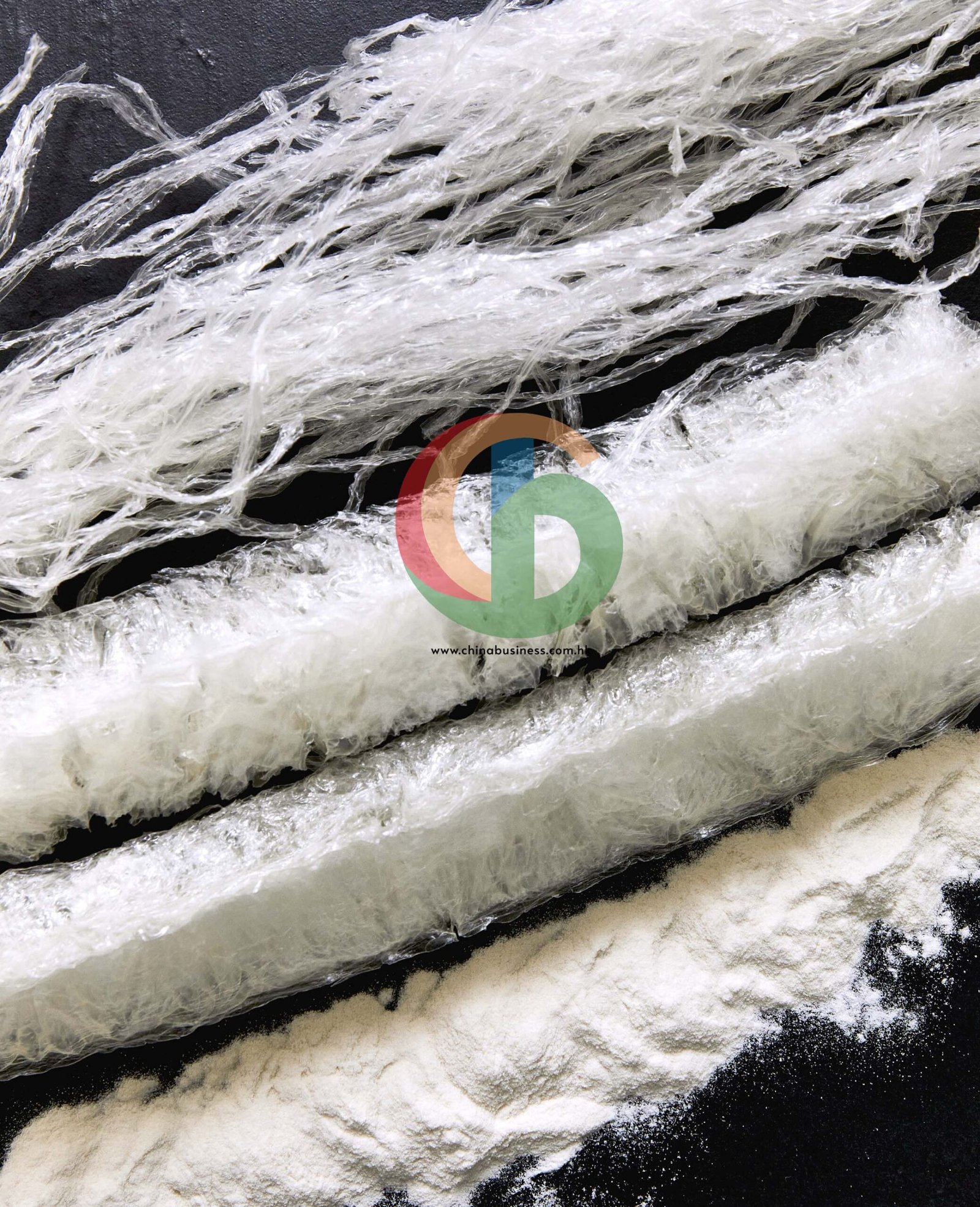
Agar-agar, often simply called agar, is a gelatinous substance derived from red algae. Known for its impressive gelling properties, it has found a firm place in culinary, pharmaceutical, and industrial applications around the world. The journey of agar from the shores of Japan to the food laboratories and kitchens of Europe is one of the more interesting stories in the history of food ingredients.
Eastern Roots: Japan, the 17th Century
The history of agar-agar traces back to Japan in the mid-17th century. According to Japanese tradition, agar was discovered by Minoya Tarozaemon in 1658 — an innkeeper who found that a seaweed jelly left out overnight had solidified after freezing. This observation led to the development of kanten, the Japanese word for agar-agar, and a monument in Shimizu-mura commemorates where it was first manufactured.
Originally, agar was sold as tokoroten — a gel-like food product. Its industrialisation as a dry and stable commodity began at the start of the 18th century. The word "agar-agar" itself has Malayan origins, though in French- and Portuguese-speaking countries it is also known as gelosa.
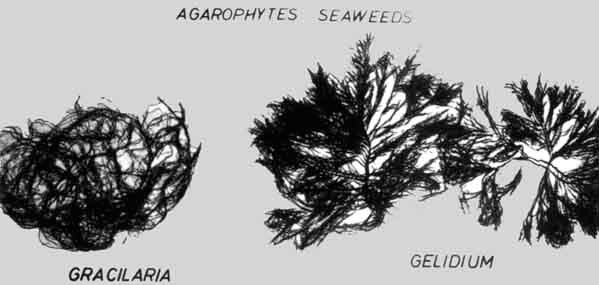 Principal agarophyte seaweed species used in global agar production.
Source: FAO Fisheries Technical Paper 288, 1987
Principal agarophyte seaweed species used in global agar production.
Source: FAO Fisheries Technical Paper 288, 1987
The European Introduction
The journey from Japan to Europe began in the 19th century, when Dutch traders recognised agar's potential and introduced it to European markets. It was not, however, until the early 20th century that agar-agar gained significant commercial traction in Europe — coinciding with the burgeoning food industry's search for new gelling agents.
Agar production in Europe drew on various species of red algae. The major sources included different species of Gelidium, Gracilaria, Pterocladia, and Gelidiella, harvested from Spain, Portugal, Morocco, Japan, Korea, Mexico, France, the USA, Chile, and South Africa. Over time, alkali treatments were developed to improve the gel strength of Gracilaria-derived agar — a significant step in production quality.
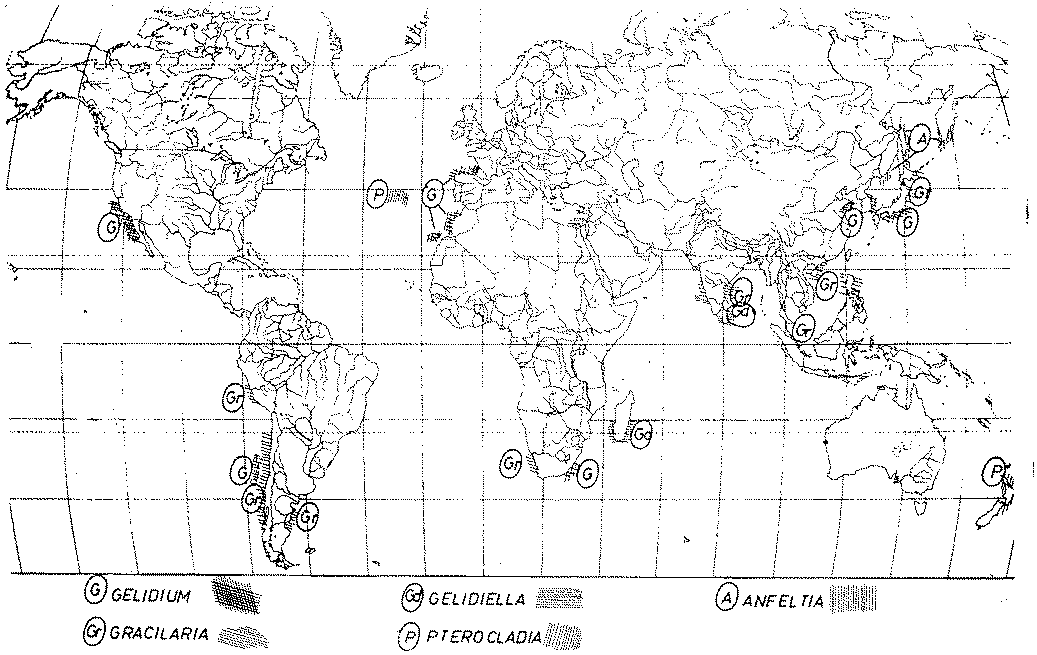 Global distribution of agarophyte seaweeds — the raw material for agar production. Source: FAO Fisheries Technical Paper 288, 1987.
The WWII Catalyst and North American Production
The modern industrialisation of agar production spans two continents and two world wars. In California, Matsuoka registered the first US agar production patents in 1921 and 1922. The freeze-extraction method — now standard practice — was developed in California in the years prior to World War II by H.H. Selby and C.K. Tseng, supported by the American government's drive for self-sufficiency in strategic materials, particularly bacteriological culture media.
World War II proved to be a decisive catalyst for the European agar industry. The shortage of Japanese agar during the war drove countries with coastal resources of Gelidium sesquipedale to begin their own production. Loureiro established the agar industry in Oporto, Portugal, while J. Mejias and F. Cabrero commenced studies in Spain — work that led directly to the establishment of the significant Iberian agar industry that continues today.
Culinary Uses
 Agar agar powder — the most common commercial form.
One of agar-agar's key attractions is its versatility as a food ingredient. Unlike gelatin, which is derived from animal collagen, agar-agar is entirely plant-based — suitable for vegetarian, vegan, and halal diets without modification or labelling caveats. Its robust gelling properties at low concentrations make it ideal for a wide range of applications: delicate fruit jellies, savoury aspics, confectionery, bakery products, and dairy alternatives.
A particularly useful property is its thermal stability — agar gels set and hold at room temperature, without refrigeration, making it practical in climates and applications where gelatin would fail.
Industrial and Scientific Applications
Beyond the kitchen, agar-agar's impact on modern science and industry has been profound. In microbiology, agar serves as the universal culture medium for bacterial and fungal growth — a role it has held since the 1880s when Fanny Hesse (working with Robert Koch) first proposed it as a substitute for gelatin in culture plates. Without agar, the development of modern microbiology, food safety testing, and pharmaceutical manufacturing would have been fundamentally different.
In the cosmetics and pharmaceutical industries, agar functions as a stabiliser, emulsifier, and thickening agent — found in everything from skin lotions to medicinal capsule formulations. Its clean label, plant-based origin, and neutral taste make it compatible with an unusually wide range of product categories.
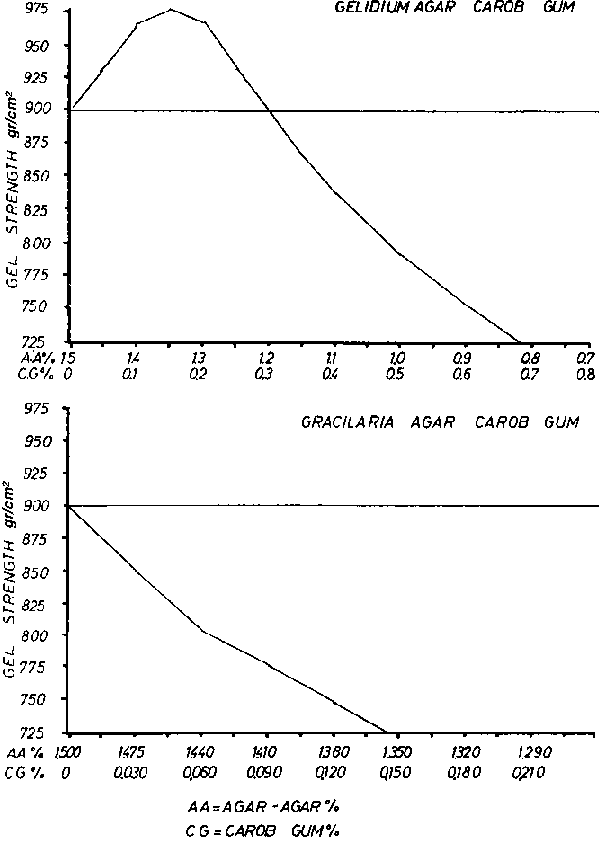 Comparison of agar gel solutions and agar-carob gum combinations — gel strength characteristics.
Source: FAO Fisheries Technical Paper 288, 1987
Comparison of agar gel solutions and agar-carob gum combinations — gel strength characteristics.
Source: FAO Fisheries Technical Paper 288, 1987
Sustainable Harvesting and Production
Agar-agar is produced primarily from two genera of red algae: Gelidium and Gracilaria. Traditionally harvested from the wild, there has been a growing trend towards aquaculture to ensure supply continuity and reduce pressure on wild stocks. The production process involves boiling the harvested algae to extract the agar, followed by purification to remove impurities, then drying and milling to produce powder or strip forms.
The move toward controlled cultivation — particularly for Gracilaria, which adapts well to aquaculture — has improved both consistency and sustainability. For buyers, the key quality parameter to specify and verify is gel strength, which varies by species, harvest location, season, and production method.
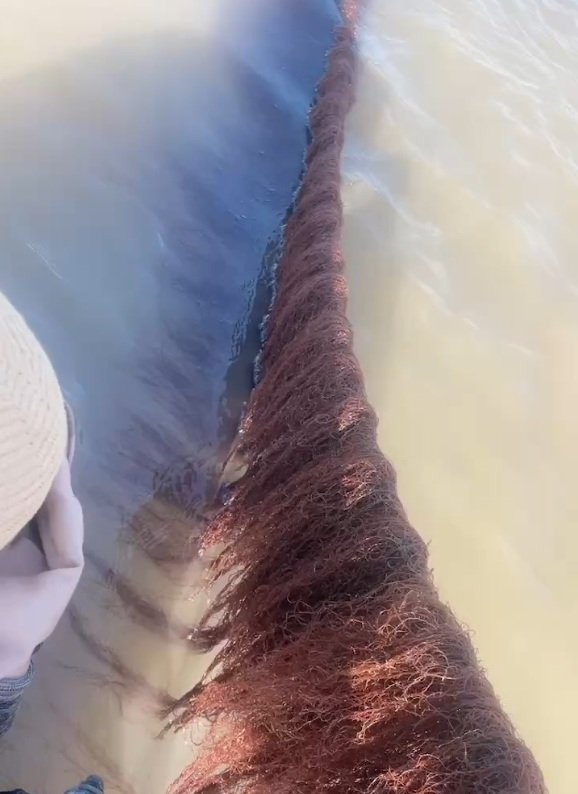 Wild agarophyte seaweed — natural harvesting from coastal waterways.
 Agar processing at production facility.
The European Market Today
Europe's agar-agar market has grown alongside the broader shift toward plant-based ingredients. Food manufacturers, pharmaceutical companies, microbiological laboratories, and cosmetics producers all draw on a consistent agar supply — and the emphasis on clean labels, sustainability, and vegan certification has made agar increasingly attractive compared to animal-derived gelling agents.
For importers, distributors, and manufacturers: understanding agar's production chain — the species used, the region of origin, the processing method, and the gel strength — is essential to specifying the right product for the right application. Generic "agar powder" covers a wide range of actual gel strengths and purity levels. The specification matters.
Your broker and agent in the Agar Agar supply chain
Our role is to act as your trusted brokerage and agency partner in the Agar Agar supply chain. We coordinate supplier matchmaking, quality assurance, and compliance monitoring, representing your interests locally in China. By working only with verified producers, we ensure safe processing, packaging, and delivery that meet international food safety standards. Our focus is on transparency, advocacy, and building long-term supplier relationships that reduce risk and create lasting value for buyers.
We welcome White Label and Private Label enquiries — with full customisation, control over quality and safety, and excellence in processing, packaging, and export.
We also monitor allergens, heavy metals, micros, and more. Available in various gel strengths and formats — strips, powder, sponge, and sticks — in customised packing formats. Contact us with your sample or exact organoleptic description for a quote, along with full physical, chemical, and microbiological specifications.
More details and specifications on Agar Agar are available here.
Sourcing Agar Agar from China for European or international markets? Start with a conversation.
Send an Enquiry