
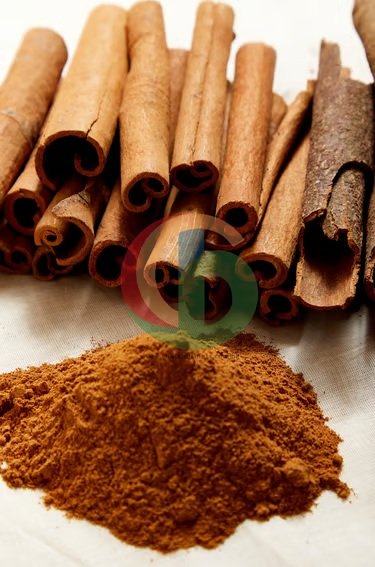
Navigating Lead in Cassia — The Regulatory & Supply Chain Landscape
How lead enters cassia naturally, what regulators across major markets require, what recent recalls reveal — and what responsible sourcing looks like in practice.
Why Lead Is Found in Cassia — and Why It Cannot Be Entirely Eliminated
Heavy metals — including lead, inorganic arsenic and cadmium — occur naturally in the environment. They are absorbed by plants from soil and groundwater, and become concentrated in roots and barks like cassia. Additional pathways include contaminated fertilisers or pesticides, and atmospheric deposition through dust and rainwater.
This makes it impossible to fully eliminate trace heavy metals from cassia during processing. Naturally occurring lead levels in spices are relatively low — typically below 3 ppm per available data. However, adulteration is a separate and serious risk: some intermediaries have been found to add compounds such as lead chromate to cassia specifically to enhance its colour. This is not a contamination issue — it is fraud, and it carries vastly different regulatory consequences.
Despite Good Agricultural Practice (GAP) and Good Manufacturing Practice (GMP) adoption across the supply chain, natural uptake of heavy metals from soil persists and must be managed through testing — not assumed away.
What Major Regulators Require
| Jurisdiction | Status / Limit |
|---|---|
| Codex (CCCF) | 2024 proposal: lead limits of 0.6–3.0 mg/kg for spice categories — not yet finalised |
| US FDA | No formal regulatory limit for lead in spices; FDA enforcement threshold for Cassia/Cinnamon is 2 ppm. Heightened import scrutiny since 2024. |
| New York State | 2021 proposal to reduce recall action limit to 0.21 ppm (lead) and 0.26 ppm (cadmium). On hold after ASTA challenge — not supported by sound science or achievable by industry. |
| EU (2023/915 of 25 Apr 2023) | Bark spices (including cassia): 2.00 ppm · Root & rhizome: 1.50 ppm · Seed spices: 0.90 ppm · Fruit spices: 0.60 ppm |
| ASTA Recommendations | Align with EU 2023 limits by spice category — bark spices at 2.00 ppm |
Note for buyers: EU regulation 2023/915 represents the most practically demanding framework for most exporters. Targeting compliance with EU limits provides a useful baseline for multi-market supply — but always confirm destination-specific requirements before finalising a purchase specification.
What Has Happened — A Brief Timeline
Our Approach to Lead Control
Active Measures at Every Stage
- Supplier selection: Stringent standards for raw material specifications. Farmers are encouraged to use organic or biological fertilisers in place of chemical ones, and to avoid pesticide use through manual tool training programmes.
- Batch inspection and testing: Every batch is inspected and tested. Batches that are unacceptable or present a risk are rejected — not renegotiated down to marginal compliance.
- Proprietary processing techniques: During processing, in-house proprietary techniques are applied specifically to minimise lead content in the finished product — beyond what standard processing alone achieves.
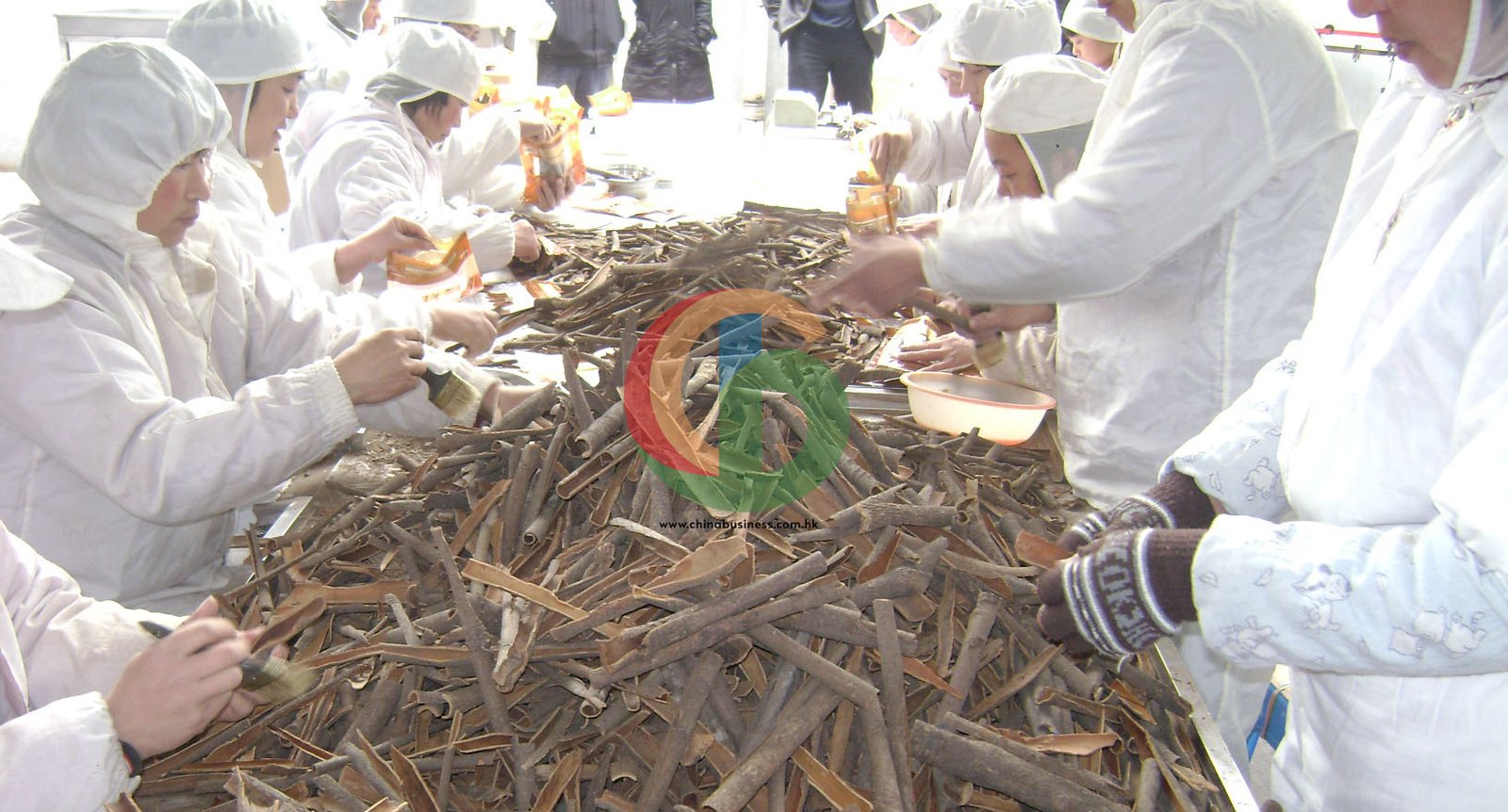
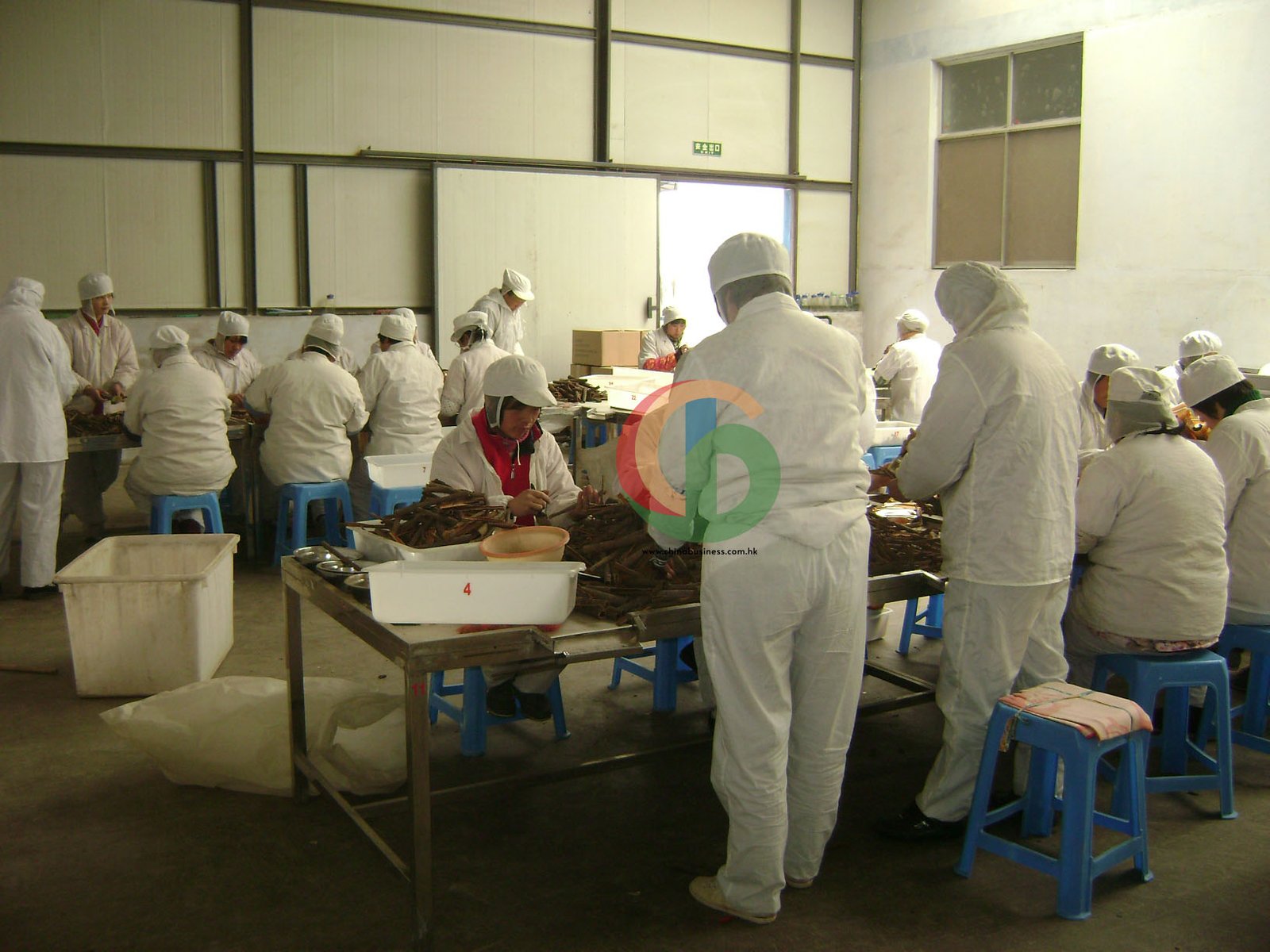
Our Cassia partner factory — processing line and quality control operations
Transparent Cassia Sourcing — Built Around Your Compliance Requirements
CBL operates as your broker and agent — not as a trader. We represent buyer interests at every stage: factory selection, raw material specification, in-process monitoring and pre-shipment testing. Our role is to ensure that what you receive matches what you specified — and that you have the documentation to prove it to your own regulators.
Agency: Fixed-fee for audits, specification development, factory visits — payable on delivery.
Brokerage: Commission on completed transaction only. You contract directly with the factory. White label and private label coordinated through this model.
Our Role in the Cassia Supply Chain
We coordinate supplier matchmaking, quality assurance and compliance monitoring in China for cassia/cinnamon. We handle lead and full heavy metal panels, coumarin content, allergens, sulphites, pesticide residues, ETO and microbiological testing. Available in various formats, grades and pack sizes. We welcome White Label / Private Label enquiries.
Contact us with your specification and target market(s). More on our Cassia/Cinnamon product page.
Need cassia or cinnamon that is compliant with EU, FDA or other regulatory frameworks?
We have the supply chain and testing protocols to support you.