
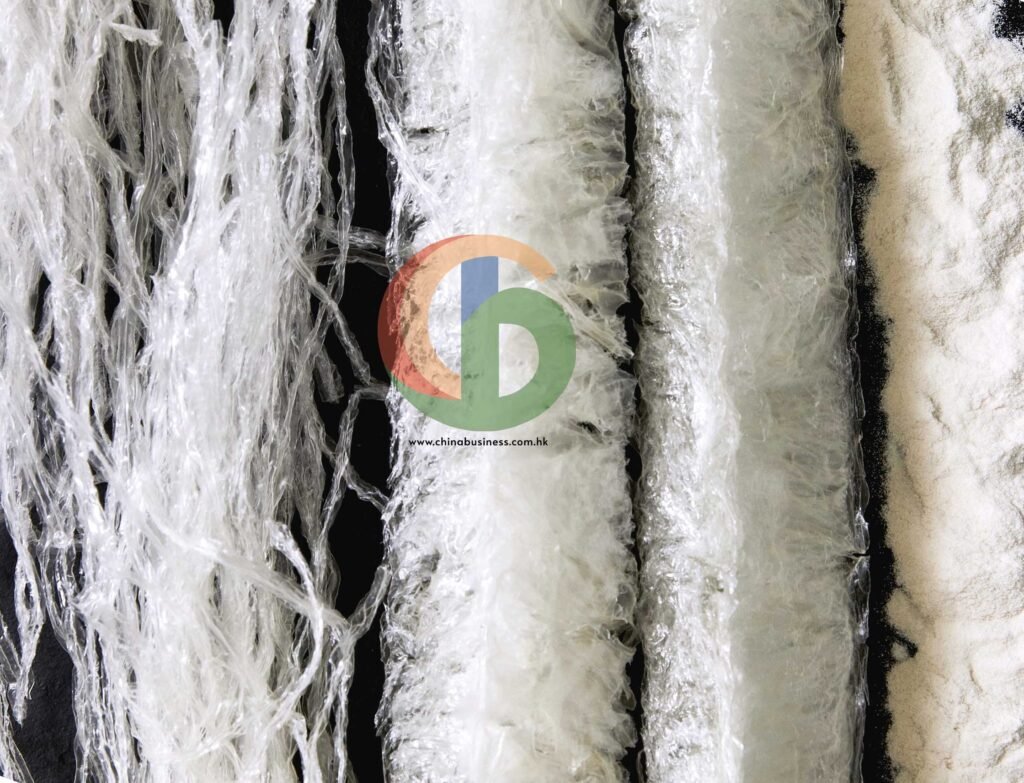
Agar Agar: Qualities, Strengths, Applications & Comparisons
From gel strength measurement to comparative applications against gelatin and carrageenan — a technical guide for buyers and formulators.
What Makes Agar Agar Different
Agar Agar, derived from red algae, has been a staple in culinary and scientific applications for centuries. Its unique gelling properties come from two primary polysaccharide components:
- Agarose (~70%): Responsible for gel-forming properties. Forms long, unbranched molecular chains that create a strong, stable gel network — ideal for laboratory electrophoresis and high-clarity food applications.
- Agaropectin (~30%): A branched structure with higher sulfation, which imparts a negative charge affecting melt point, gel strength and texture response.
The quality of agar varies based on seaweed species, harvest conditions and processing method — all factors that CBL monitors at source.
Where Agar Agar Is Used
Culinary
Vegetarian alternative to gelatin in desserts, jellies, sauces and confectionery.
Microbiology
Essential for culture media to grow bacteria and fungi in laboratories worldwide.
Plant Tissue Culture
Provides solid support medium for plant propagation and tissue culture research.
Pharmaceuticals
Used as a laxative and as a binder/filler in capsules and tablet formulations.
Cosmetics
Thickener and stabiliser in creams, lotions, shampoos and skincare formulations.
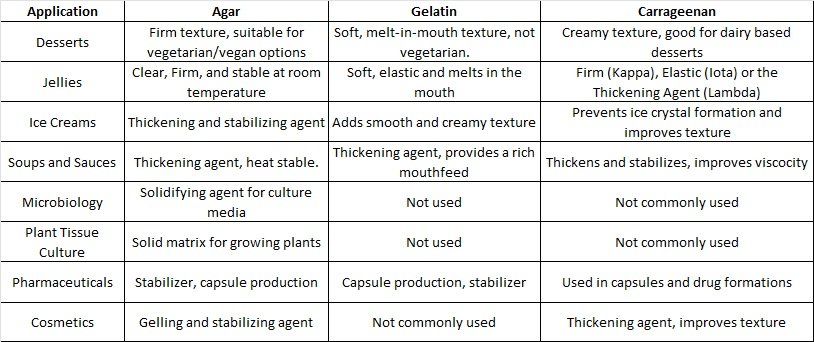
Comparative Applications: Agar, Gelatin and Carrageenan across food and non-food sectors
Measuring Strength — and Recommended Grades
Gel strength is expressed in grams per square centimetre (g/cm²) and is the primary quality metric for agar. It is determined by agar concentration and cooling temperature. As a general informal test method:
- Weigh 1.5 g of agar powder and dissolve in 100 ml of distilled water.
- Boil, pour into a mould, and allow to cool and set at room temperature.
- Use a texture analyser to measure the force required to depress the gel surface by a defined distance.
Internationally accepted formal test methods include:
- ASTM 6376-99 — Bloom Test Method (1999)
- ISO 1628-1:1998 — Dynamic Viscometry Method
- OECD Guidelines 252, 253 and 621 for Testing (2024)
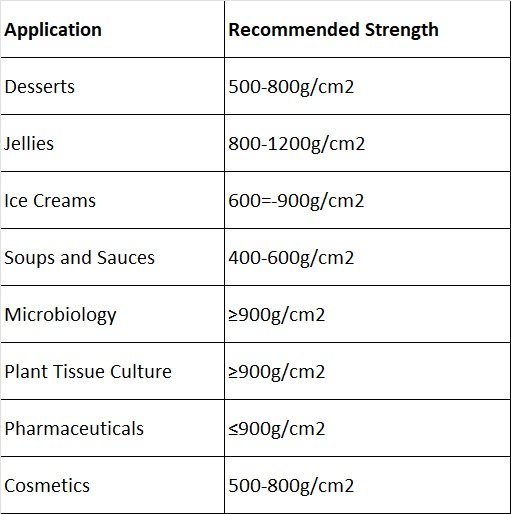
Recommended gel strengths by application category
Agar Gel Solutions vs. Agar-Carob Gum Blends
The chart below, reproduced from FAO Fisheries Technical Paper 288 (1987), illustrates gel solution behaviour at different concentration levels — and compares pure agar gel performance with agar-carob gum blends. This reference remains widely used by formulators assessing hydrocolloid selection.
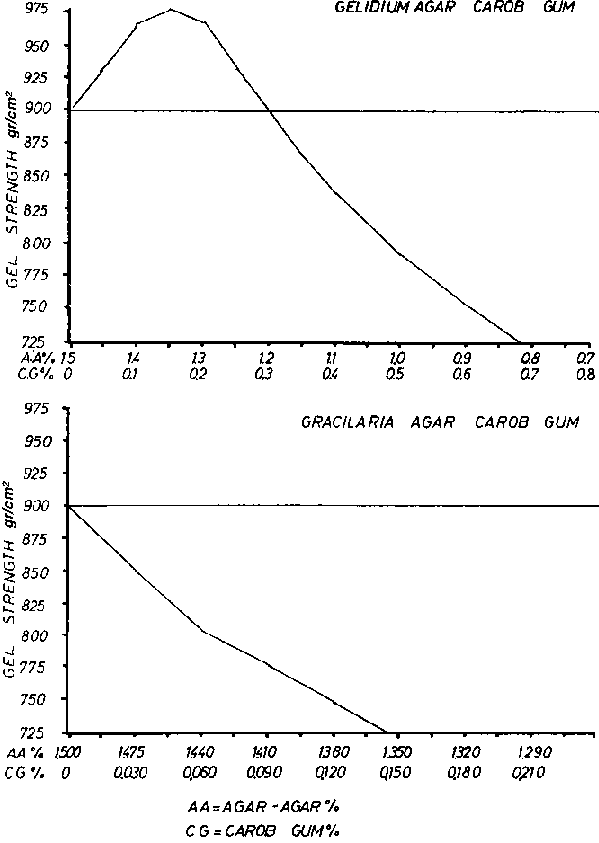
Source: FAO Fisheries Technical Paper 288 (1987) · Figure 14: Agar Gel Solutions & Agar-Carob Gum
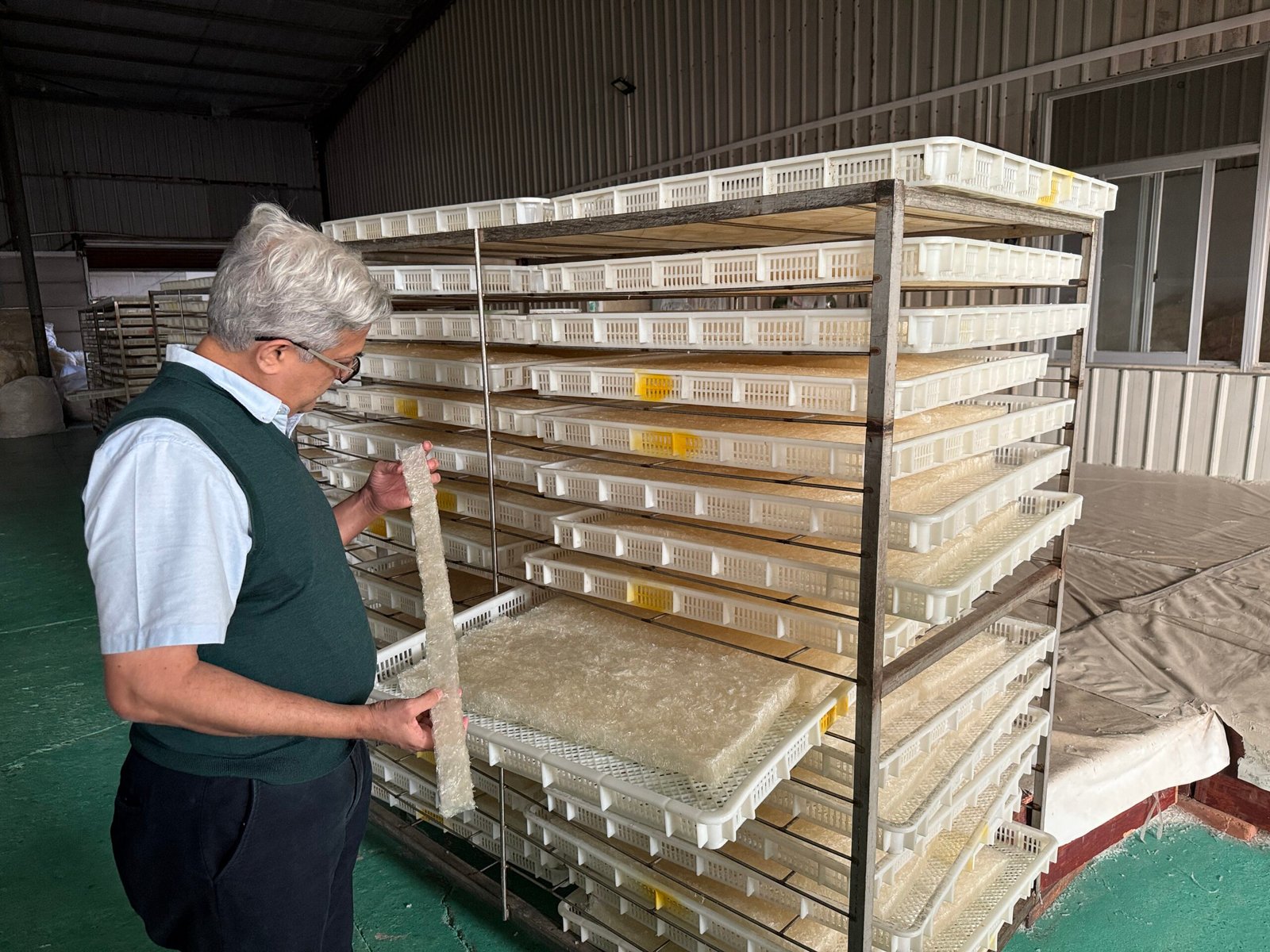
Agar Agar powder — recent production batch
Matching Specification to Source
CBL works as your broker and agent — not as a trader. We help you identify the right gel strength and format for your application, then match you with a verified Chinese producer who can reliably supply to that specification.
Agency: Fixed-fee audits, factory visits and specification consultations — payable on delivery.
Brokerage: Commission on completed transaction only. You contract directly with the factory. White label and private label coordinated through this model.
Our Role in the Agar Agar Supply Chain
We coordinate supplier matchmaking, quality assurance and compliance monitoring in China. We welcome White Label / Private Label enquiries across all gel strengths and formats: strips, powder, sponge, sticks. Allergens, heavy metals and microbiological testing all covered.
Contact us with your sample or full organoleptic specification for a quote. More details on our Agar Agar product page.
Need a specific gel strength or format for your application?
Share your specification and we will source a matched sample.