
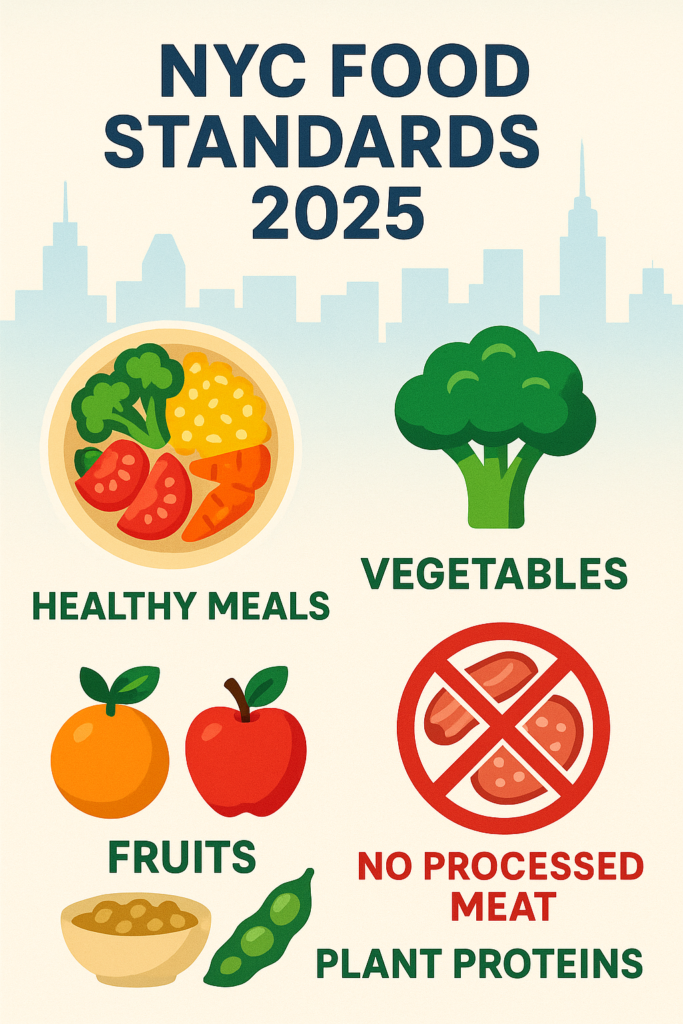
NYC Food Standards 2025: Analysis for Food Handlers
Comprehensive professional analysis of the updated NYC Food Standards — what changes, when it takes effect, and what food service operators need to do.
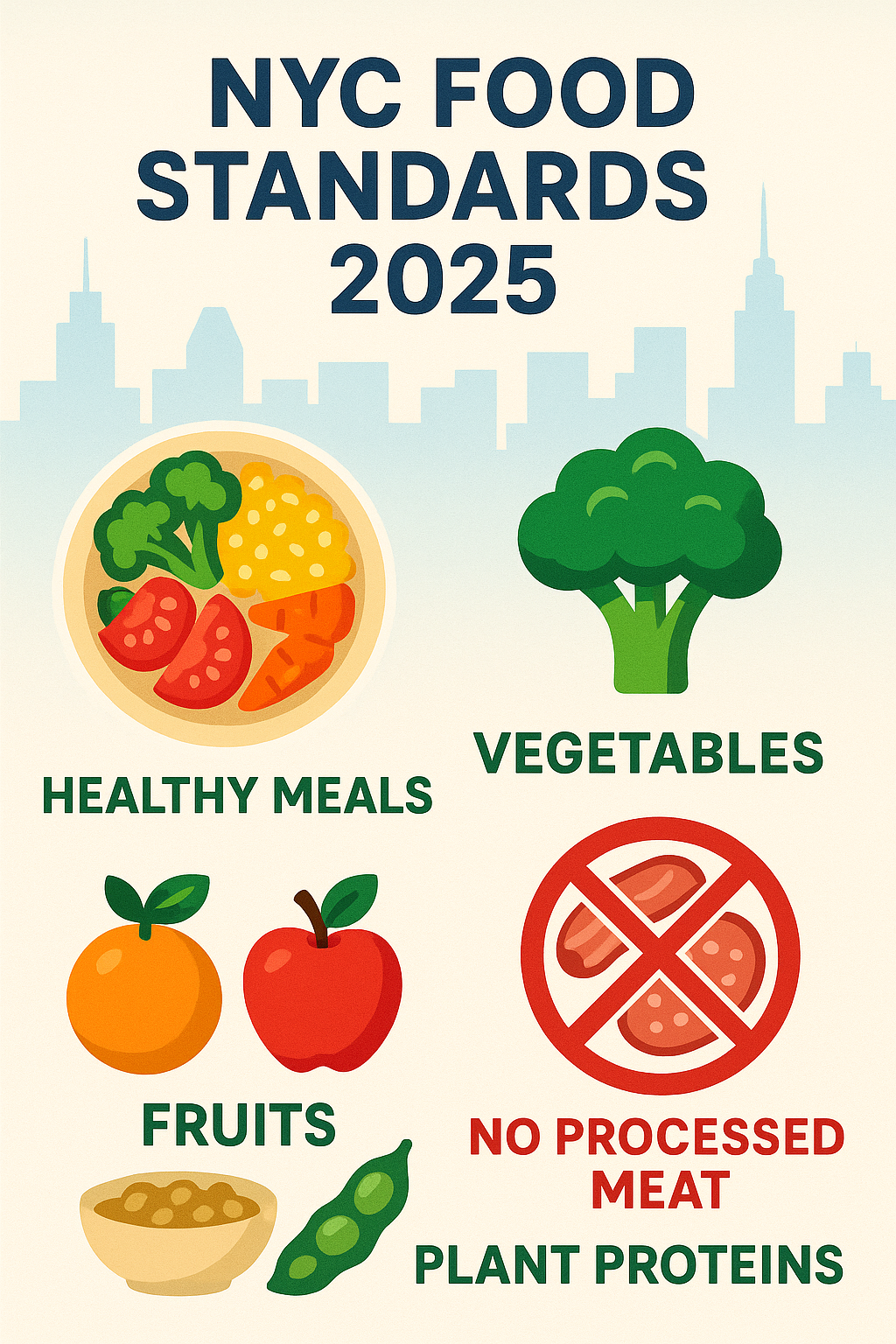
NYC institutional food standards set a direction that spreads. When 219 million annual meals shift toward plant proteins, natural flavour enhancers, and clean-label ingredients — demand patterns change for the ingredients that go into those meals. Garlic, cassia, and Agar Agar sit squarely in the "natural, minimally processed" category that these standards favour. We track these developments because our buyers need to anticipate what their customers will require.
The NYC Food Standards 2025 represent the most significant update to municipal food policy since the programme's inception under Executive Order 122 in 2008. Implementation is required by 1 July 2026. Approximately 219 million meals and snacks served annually across 11 city agencies are affected. Key changes: complete elimination of processed meats, expanded artificial sweetener ban to all ages, and stricter plant protein requirements.
Regulatory Framework and Background
The NYC Food Standards originated from Executive Order 122 (2008) under Mayor Bloomberg and were significantly updated through Executive Order 8 (2022) under Mayor Adams. The 2022 executive order formally integrated the Good Food Purchasing Program (GFPP) principles, establishing NYC's commitment to transparency in procurement — covering local economies, environmental sustainability, workforce conditions, animal welfare, and nutrition.
Section I — Purchased Food Standards
Artificial Sweetener Ban — All Ages
The complete elimination of artificial sweeteners now applies to all age groups, expanding beyond the previous restriction to minors only. This represents a significant departure from federal guidelines, which still permit these additives in food products.
Sodium Limitations
Sodium thresholds remain at ≤480 mg per serving for general populations, with ≤420 mg for children under 5 years. NYC adults currently consume an average of 3,292 mg sodium daily — well above the recommended 2,300 mg. Institutional limits at this scale are expected to contribute to measurable population-level reductions.
Dual Inventory Systems
- Separate low-sodium products for paediatric programmes
- Clear labelling and storage protocols
Supplier Certification
- Require detailed nutrition analysis from vendors
- Contractual sodium compliance commitments
Flavour Enhancement
- Herbs, spices, and acid-based flavour profiles
- Recipe modification to meet thresholds without flavour loss
Processed Meat Elimination
The complete ban on processed meats by July 2026 aligns with the WHO's 2015 classification of processed meats as Group 1 carcinogens. This affects traditional menu staples including bacon, sausage, ham, hot dogs, and deli meats. NYC schools had already eliminated processed meats in 2019 — this extends the ban across all 11 city agencies.
Evidence base: 18% increased colorectal cancer risk per 50g daily consumption (WHO). Aligns with American Cancer Society recommendations.
Protein Diversification
- Beans, lentils, tofu, tempeh
- Fresh poultry and seafood procurement increases
Flavour Profile Maintenance
- Seasoning blends to replicate familiar tastes
- Natural smoke flavours, spice combinations
Cost Management
- Plant proteins typically offer better cost-per-serving ratios
- Bulk purchasing economies for compliant ingredients
Plant Protein Requirements
The 2025 standards mandate increased weekly plant protein servings with emphasis on "whole or minimally processed" sources — aligning with the 2025 Dietary Guidelines Advisory Committee's recommendations to prioritise plant proteins over animal proteins.
Menu Planning
- Minimum 2 plant protein servings weekly per meal type
- Maximum 2 beef servings weekly at three-meal sites
Nutritional Balance
- Ensure amino acid completeness in plant-based meals
- Staff training on legume preparation and flavour development
Section II — Meal and Snack Service Standards
Nutritional Targets
Three-meal sites must not exceed 2,000 calories and 2,300 mg sodium daily, with saturated fat and added sugars limited to <10% of total calories.
Deep-Frying Prohibition
Deep-frying equipment is prohibited in new kitchens. Existing facilities may continue using fryers but are encouraged to phase them out. This requires equipment procurement review, menu reformulation of traditionally fried items, staff retraining, and updated food safety protocols for new ingredients and preparation methods.
Beverage Standards
Primary Beverage
- Plain water as default — available at all times
Milk Standards
- 1% or non-fat for ages 2+
Flavoured Milk
- Restricted to ≤10g sugar per 8 fl oz
100% Juice
- When offered, must meet strict criteria. Phase-out recommended — concentrated sugars without fibre.
Section III — Population-Specific Standards
| Population | Caloric Adjustment | Special Requirements |
|---|---|---|
| Adults in Custody / Youth Detention | ≥2,200 calories/day | Milk exclusion from lunch/dinner analysis |
| Shelter Residents (14+) | Increased caloric needs | Similar to detention standards |
| Therapeutic Care | Medical diet precedence | Plant-based options available on request |
| Emergency / Disaster Response | No restrictions | Long-term nutrition planning encouraged |
Professional food handlers must navigate religious dietary laws and cultural preferences while maintaining standard compliance. The standards require solicitation of client feedback including cultural preferences — reflecting NYC's institutional commitment to food equity.
Environmental Sustainability and Good Food Purchasing
Carbon Footprint
- 3–15% reduction targets from baseline
Local Sourcing
- Priority for regional suppliers where available
Organic Preferences
- USDA Organic as baseline for sustainable certifications
Food Waste Audits
- Required implementation with source reduction strategies
Supply chain transparency requirements extend to vendors: contractual commitments on labour law adherence, public reporting on food contracts and sourcing origins, and support for worker rights and freedom of association.
Monitoring and Compliance
Future Implications
The NYC standards anticipate federal policy directions — the 2025–2030 Dietary Guidelines for Americans are expected to further emphasise plant-based proteins. NYC's institutional scale makes it a leading indicator: what becomes mandatory here tends to become standard practice elsewhere within 3–5 years. Food service professionals who adapt early will be positioned ahead of broader industry adoption.
Technology integration is also part of the trajectory: menu planning software with built-in nutritional compliance checking, digital supply chain tracking for sourcing and ingredient compliance, and client engagement platforms for dietary accommodation and feedback.
Conclusion — Action Points for Food Service Professionals
The NYC Food Standards 2025 require comprehensive operational restructuring well before the July 2026 deadline. Professional implementation demands:
The original NYC Food Standards document can be downloaded directly from the NYC Health Department website.
This post provides a professional analysis of the NYC Food Standards 2025 as published and is intended for informational purposes only. Standards and implementation guidance may be updated by the NYC Health Department prior to the July 2026 deadline. Always consult the official NYC Health Department documentation and seek qualified professional advice before making operational or procurement decisions. China Business Limited accepts no liability arising from use of this information.
Looking for clean-label, naturally processed food ingredients that align with emerging institutional food standards? We source what meets the brief.
Talk to Us